



24 Aug What to Know Before Booking a Private Charter to The Bahamas
A private charter to The Bahamas gives you something scheduled travel cannot: a trip shaped around your day, your group, and where you actually want to go. For families, yacht guests, resort travelers, pet owners, and groups carrying extra baggage or equipment, that flexibility can make the journey feel far easier from the start.
The process is also different from buying a seat on a scheduled flight. A private charter is an on-demand, nonscheduled flight, so it is not booked through the standard online checkout. Tropic Ocean Airways currently asks private-charter guests to submit an inquiry so the charter team can review the requested itinerary, confirm availability, and prepare pricing based on the details of the trip.
The better your request, the smoother the planning process. Before you inquire, here is what to know, what to gather, and which questions to ask before confirming your charter.
Private Charter Is Built Around Your Itinerary
A private charter is planned around the trip you want to take. Instead of choosing from a published schedule, you share your preferred departure point, destination, travel date, timing, guest count, baggage, and any special requests.
That information helps Tropic Ocean Airways evaluate what is possible for the aircraft, route, destination, and operating conditions. It also helps the team identify anything that may need extra coordination, such as customs clearance, pets, remote arrivals, water landing suitability, or transfer arrangements.
This is why private charter guests are directed to submit an inquiry for availability and pricing. The inquiry is not just a formality. It is the first step in building a safe, practical Bahamas itinerary around your plans.
Know Your Departure and Final Destination
Start with the two most important points: where you want to leave from and where you ultimately want to arrive. The more exact you can be, the more helpful your charter request will be.
When you inquire, provide your preferred departure location, requested travel date, preferred departure window, and whether the trip is one-way or round-trip. If the itinerary includes additional stops, include those as well. Then share the most specific final-destination details you have, such as the island, resort, marina, dock, yacht, lodge, private property, or other arrival point.
For Bahamas travel, your final waterfront destination may not be the same place where customs and immigration clearance occurs. Depending on the itinerary, guests may need to clear at an approved point of entry before continuing to a resort, island, yacht, or private property. Sharing the full destination picture early helps the team evaluate the right routing from the beginning.
Understand Land and Water Arrival Options
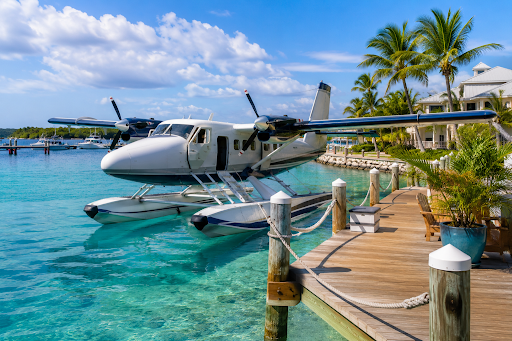
Tropic Ocean Airways operates amphibious aircraft, which can use qualifying runways and water locations. This is one of the reasons private charter is especially useful for Bahamas travel, where the final destination may be a waterfront resort, private island, yacht, marina, or remote property.
Still, a preferred water arrival must be evaluated before it can be confirmed. Not every dock, beach, marina, harbor, or vessel is suitable for a seaplane arrival. Tide, wind, sea state, visibility, vessel position, dock access, local rules, and nearby activity may all affect the plan.
In some cases, the best option may be an alternate airport, seaplane base, marina, or transfer. That does not necessarily make the trip less convenient. It simply means the route is being planned around what is safe and practical on that day.
For yachts, share the vessel name, planned location, marina, or coordinates if available. For resorts, lodges, and private homes, include the property name, island, dock details, and any local contact who can help confirm arrival logistics.
Provide an Accurate Guest Count
The charter team needs an accurate guest count to plan the flight properly. Passenger count, baggage, route, fuel, weather, and aircraft performance all work together in flight planning.
Be ready to share the number of adults, children, and infants traveling. Approximate guest weights may be requested, especially when planning around baggage, route, or operating conditions. If anyone in your group has accessibility needs, mobility considerations, or requires boarding assistance, mention that during the inquiry process.
If a minor will be traveling without a parent or guardian, let the team know early. Additional information or documentation may be required.
These details are part of safe planning, and they are requested so the operator can match the itinerary with the aircraft’s requirements and the realities of the route. They are not meant to make the process feel intrusive. They help the team plan a flight that is safe, practical, and appropriate for the group traveling.
Be Specific About Baggage
Baggage is one of the most important details to share before booking. It can affect aircraft planning, routing, and whether additional arrangements are needed.
Include the number of bags, approximate sizes, and bag types. Tropic Ocean Airways’ current travel policies note that total flight weight includes guests and baggage, and soft-sided bags are recommended because they are easier to fit within aircraft baggage areas.
Mention anything oversized, heavy, or unusual, including golf clubs, fishing equipment, diving gear, strollers, coolers, wedding décor, event supplies, camera gear, musical instruments, or yacht provisions. These items may be possible to accommodate, but they should be reviewed before the flight is confirmed.
If your group is bringing more than the aircraft can reasonably carry, ask about cargo alternatives or separate arrangements. Guests should also avoid packing prohibited hazardous materials. When in doubt, ask before travel day so the team can help address the question in advance.
Prepare Travel and Customs Documents
Private charter guests still need the required documents for international travel. For travel between the United States and The Bahamas, that typically includes a valid passport and any required customs and immigration documentation.
Families should prepare proper documentation for minors. Pet owners should gather permits, veterinary records, and import documentation well before departure. Travelers may also be asked for lodging, resort, vessel, or destination details depending on the itinerary and applicable requirements.
You should also confirm what is required for the return to the United States. Rules can change, and the correct documentation may depend on who is traveling, where the flight is operating, whether pets are included, and the final routing.
Use this article as a planning guide, not a replacement for current government or airline requirements. Before departure, confirm the latest rules with the appropriate government agencies and Tropic Ocean Airways.
Tell the Charter Team About Pets Early
Tropic Ocean Airways is pet-friendly, but pets should be included in the conversation from the start. International pet travel often requires advance paperwork, and requirements may vary by destination, animal, routing, and service type.
When you inquire, share your pet’s type, breed if applicable, approximate weight, and whether the pet will travel in a carrier. Ask what paperwork is required and whether any cleaning fees, handling rules, or other conditions apply.
Current pet requirements are published on the airline’s travel-information page. Because The Bahamas has its own rules for animal entry, pet owners should begin gathering documents well before the trip.
Rules may differ between private charter and scheduled service, so do not assume the process is identical. Confirm current pet requirements before booking, especially for international travel.
Weather May Affect the Plan
Island flying depends on safe operating conditions, and weather can change the plan. Flights may be delayed, diverted, rerouted, or adjusted when conditions require it. Tropic Ocean Airways states that weather-related delays or diversions may occur when necessary for safety.
Water arrivals can be more sensitive to local conditions than runway arrivals. Wind, tide, sea state, visibility, boat traffic, and conditions at the specific landing area may affect whether the preferred arrival point can be used.
Build some flexibility into the day when possible. This is especially important if you are connecting to a yacht departure, event, resort transfer, dinner reservation, or international flight. Avoid extremely tight onward connections when possible. If weather affects the itinerary, the airline will communicate changes and available alternatives.
Ask What Is Included in the Quote
Before confirming your charter, make sure you understand what the quote covers. Private charter pricing can vary based on the route, aircraft, timing, guest count, baggage, additional stops, customs needs, waiting time, and requested support services.
Ask whether the quote is one-way or round-trip, whether taxes and fees are included, and how waiting time or additional stops are handled. You may also want to ask about ground transfers, boat transfers, catering, car service, baggage or cargo arrangements, pet-related charges, and cancellation or change terms.
Do not assume a service is included by default. If your itinerary depends on a transfer, dock access, resort coordination, special timing, extra baggage, or pet accommodations, confirm the details before finalizing the trip.
Book Early for Complex or Peak-Period Trips
The more moving parts your trip has, the more helpful it is to inquire early. Private charter is flexible, but aircraft availability, crew planning, destination logistics, customs coordination, and transfer details all take time to review.
Early inquiries are especially useful for holiday travel, large groups, remote resorts, yacht transfers, multistop itineraries, fishing or diving equipment, weddings, events, and guests traveling with pets or significant baggage.
There is no universal advance-booking deadline. A straightforward one-way trip may be easier to review than a peak-period itinerary with multiple stops, oversized gear, and a waterfront arrival. Starting early gives the team more room to evaluate the best options.
Information to Include in Your Charter Request
A strong charter request gives Tropic Ocean Airways the details needed to evaluate your trip efficiently. You do not need to have every detail finalized, but the more you can share, the better.
Include:
- Departure city or preferred departure point.
- Final destination, including island, resort, marina, dock, yacht, lodge, or property name.
- Requested travel date or date range.
- Preferred departure time or travel window.
- Whether the trip is one-way or round-trip.
- Any additional stops.
- Number of adults, children, and infants.
- Approximate baggage count and bag types.
- Oversized items or specialty equipment.
- Pet details, including animal type and approximate weight.
- Resort, yacht, lodge, or local contact information.
- Accessibility needs, timing constraints, or special requests.
- Best contact information for follow-up.
These details help the charter team understand the full picture: where you are going, who is traveling, what is coming with you, and what needs to be coordinated before departure.
Frequently Asked Questions
1. How do I book a private charter to The Bahamas?
Submit a private charter inquiry to Tropic Ocean Airways with your requested itinerary, guest count, baggage details, destination information, and preferred timing. The charter team will review availability and pricing based on the specifics of your trip.
2. How much does a private charter cost?
The cost depends on the itinerary. Route, aircraft, timing, guest count, baggage, stops, waiting time, customs needs, and requested support services can all affect pricing. A detailed inquiry is the best way to receive an accurate quote.
3. Can the aircraft land at my resort or yacht?
It may be possible, but the location must be evaluated first. Amphibious aircraft can use qualifying runways and water locations, but not every dock, beach, marina, harbor, or vessel is suitable. If the preferred water arrival is not practical, an alternate airport, marina, or transfer may be recommended.
4. Do private charter guests still clear customs?
Yes. International private charter guests still need to comply with customs and immigration requirements. Your final destination may not be the customs-clearance point, so the route may include an approved point of entry before continuing onward.
5. How much luggage can I bring?
It depends on the aircraft, guest count, route, and total flight weight. Tropic Ocean Airways’ current travel policies note that total flight weight includes guests and baggage, and soft-sided bags are recommended. Share baggage details early, especially if you are bringing oversized items or equipment.
6. Are pets allowed?
Tropic Ocean Airways is pet-friendly, but pets require advance planning for international travel. Share your pet’s type and approximate weight during the inquiry process, review the airline’s current pet requirements, and confirm any required permits, veterinary records, cleaning fees, or handling rules before booking.
7. Can I book a multistop charter?
Multistop charters may be possible depending on the route, timing, aircraft availability, customs requirements, weather, and destination logistics. Include every requested stop in your initial inquiry so the team can evaluate the full itinerary.
8. What happens if weather affects the flight?
Flights may be delayed, diverted, rerouted, or adjusted when weather affects safe operations. Water arrivals may be especially sensitive to local conditions. Tropic Ocean Airways will communicate changes and available alternatives, and guests should avoid extremely tight onward connections when possible.