

02 Sep Tropic Ocean Airways Commitment to Safety
When you climb aboard a seaplane bound for Bimini or the Out Islands, the goal is effortless travel. You look forward to soaring over turquoise water, landing on the sea, and stepping onto the dock with a cold drink already in hand.
But that ease doesn’t happen by accident. Behind every seamless flight is a deliberate operational framework built specifically for amphibious aviation. Flying over water and landing on it is a different discipline than flying a standard route, and it calls for specialized flight crews, meticulous in-house engineering, and safety protocols that start long before the engines ever turn over.
Safety is embedded into every layer of our operation, from crew standards and fleet care to flight execution. Here is a closer look at what goes into Tropic Ocean Airways’ commitment to safety and how we set a gold-rated standard across Florida and The Bahamas.
A Culture Founded on Discipline and Specialization
Flying amphibious aircraft takes more than standard regional airline know-how. Tides, wind patterns, sea states, and saltwater exposure all come into play, and handling them well requires a company built around marine flight operations from the start.
Tropic Ocean Airways was built from the ground up to operate in these environments. Our standard operating procedures focus on threat and error management, conservative flight planning, and structured decision-making.
The result is a trip that feels calm and effortless, from your private terminal departure to your arrival at the dock.
Two Certified Pilots on Every Flight Deck
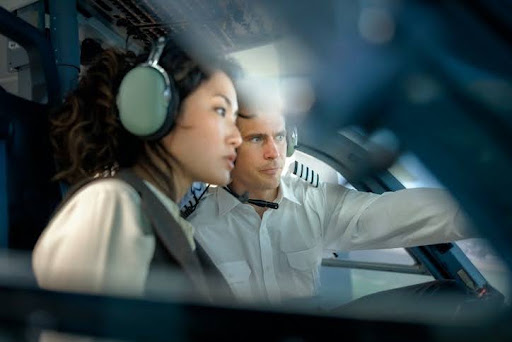
Under FAA rules, amphibious aircraft our size are permitted to fly with a single pilot. We hold ourselves to a higher bar. Every Tropic Ocean Airways flight carries an FAA-approved two-pilot crew: a Captain and a fully qualified Second in Command.
Two pilots on the flight deck means continuous mutual monitoring, disciplined checklist execution, and shared decision-making at every point in the trip — not just when something goes wrong, but as standard practice on every flight.
Our pilots train beyond what regulations require. Their curriculum is modeled on U.S. Navy operational and crew-resource management standards, with an emphasis on discipline, situational awareness, and clear decision-making under pressure. Pilots move deliberately from the right seat to the left, building deep experience before they take command.
They also hold Basic Life Support (BLS) certification and complete Enhanced Medical Aviation training. Before every departure, our crews run standardized in-cockpit safety checklists together, a habit that keeps communication sharp on every single flight.
A Fleet Purpose-Built for Over-Water Flying
The Bahamas calls for aircraft designed specifically for island conditions. Our fleet is built around modern Cessna Grand Caravan EX Amphibians, known industry-wide for their performance over water and around islands.
These aircraft land interchangeably on water or paved runways, giving us the flexibility to reach remote cays, private docks, and regional airports alike. Modern avionics and reliable turbine performance let our crews navigate island weather with precision, so guests get a ride that’s smooth as well as safe.
24/7 In-House Maintenance and Corrosion Prevention
Many charter operators send mechanical work out to third-party shops. We don’t. Our fleet is cared for daily, in-house, under the direct supervision of Tropic Ocean Airways’ Director of Maintenance, who brings more than three decades of aviation maintenance experience to the job.
Saltwater is unforgiving on aircraft, and Tropic Ocean Airways has built a reputation as an industry leader in corrosion prevention and long-term aircraft preservation. Our approach was significant enough to earn a six-page editorial feature in Flying magazine.
To protect aircraft longevity, reliability, and safety, our fleet goes through:
- Daily freshwater washdowns to remove salt residue
- Specialized anti-corrosion treatments applied systematically across the airframe
- Continuous preventative maintenance inspections by certified technicians, on-site
Because our technicians see every aircraft every day, nothing slips through on a delayed inspection cycle.
Third-Party Validation: ARGUS Gold Rated
We believe internal high standards should be matched by independent verification. Tropic Ocean Airways holds an ARGUS Gold Safety Rating, a distinction awarded by ARGUS International, one of the premier aviation safety and due-diligence organizations in the world.
An ARGUS Gold rating reflects excellence in pilot experience, verified operational compliance, a clean safety record, and strict adherence to maintenance standards. It’s independent confirmation, for guests, resort partners, and charter clients alike, that our day-to-day operations meet a top-tier standard in private aviation.
Conservative Weather Evaluation for Complete Peace of Mind
Island travel depends on clear, safe operating conditions. Because water landings are sensitive to local marine weather, our operations team and flight crews evaluate wind, sea state, visibility, and tides continuously, right up until departure.
If conditions at a specific water landing site aren’t right, our crews make the conservative call. That might mean shifting departure timing or redirecting to a nearby runway or alternate landing area. It’s a safety-first approach, and it’s what keeps the journey smooth and stress-free even when conditions don’t cooperate.
Built for Confidence from Departure to Arrival
From our private departure lounge in Fort Lauderdale to the crystal waters of Bimini and the Abaco Cays, every detail of the Tropic Ocean Airways experience is built around one goal: your confidence in the journey.
Navy-modeled two-pilot crews. Veteran maintenance technicians. An ARGUS Gold rating. Together, they’re what let you relax and actually enjoy the flight.
Whether you are booking a scheduled getaway or arranging a private charter for your family, Tropic Ocean Airways delivers speed and convenience with a safety standard we don’t compromise on.
Frequently Asked Questions
1. Does Tropic Ocean Airways fly with two pilots on every flight?
Yes. While FAA regulations allow single-pilot operations for aircraft of our size, Tropic Ocean Airways voluntarily operates every flight with an FAA-approved two-pilot crew, consisting of a Captain and a qualified Second in Command.
2. What special training do Tropic Ocean Airways pilots receive?
Our pilot training programs are modeled on U.S. Navy operational and crew-resource management standards, focusing on decision-making in complex marine environments. Pilots also hold Basic Life Support (BLS) certification and Enhanced Medical Aviation training, progressing deliberately from right seat to left seat to build deep flight-deck experience.
3. How does Tropic Ocean Airways maintain its amphibious aircraft?
All maintenance is performed in-house under the direct supervision of our Director of Maintenance, who has over 30 years of aviation experience. Because saltwater operations require specialized care, our team uses industry-leading corrosion prevention protocols, daily freshwater washdowns, and proactive daily inspections.
4. What does the ARGUS Gold Safety Rating mean?
An ARGUS Gold Safety Rating is awarded by ARGUS International, a global leader in aviation safety audits. The rating verifies high standards in pilot experience, operational compliance, historical safety records, and maintenance execution.
5. Can Tropic Ocean Airways aircraft land on both land and water?
Yes. We operate Cessna Grand Caravan EX Amphibians, which are purpose-built to land interchangeably on traditional paved runways and water locations throughout Florida and The Bahamas.